Tehran, Iran – The memorandum of understanding (MoU) signed between Iran and the United States has survived its difficult first days, producing a roadmap towards a possible long-term resolution of the war launched by the United States and Israel almost four months ago.
However, months of tough political and technical discussions still lie ahead, and although Iranians are watching closely, optimism remains subdued.
Recommended stories
list of 4 itemsend of list
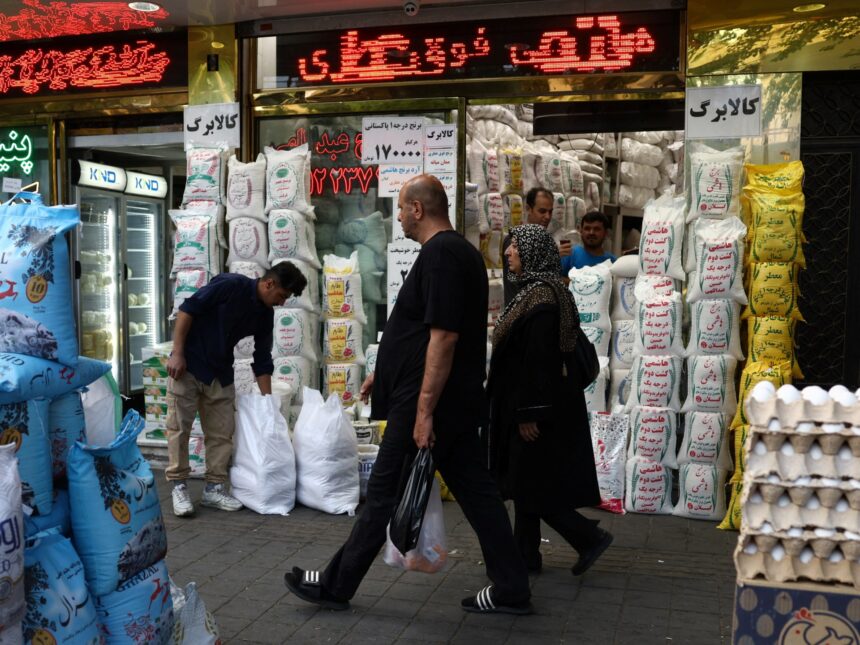
“We went from daily bombings to talking about buying corn from the United States,” Ehsan, who lives in central Tehran, told Al Jazeera. “So that’s a good change, but our quality of life continues to get worse by the day.”
He was referring to news that Iran will be able to purchase humanitarian goods, including food and medicine, using some of its own funds frozen abroad that will apparently be released as part of the deal.
Iran’s central bank governor Abdolnaser Hemmati said in a video message on Tuesday that Tehran could buy corn, wheat and other agricultural products from the United States if their price and quality are acceptable, but the text of the deal does not require it to do so.
The US Treasury has also issued a general license as part of the MoU authorizing the production, delivery and sale of crude oil, petrochemical products and petroleum products of Iranian origin until August 21. Payments due to Iran for these purchases can be made in US dollar-denominated funds.
This will mean that the country will be able to sell oil with less need for hidden discounts, circumnavigation methods and complicated payment or barter routes. Iran has already exported millions of barrels of oil preloaded onto supercarriers in recent days, so that could mean more money will be pumped into the economy.
But the effects will not be felt directly or immediately by the Iranian people, as they continue to face some of the highest inflation rates in the world, particularly in food and medicine.
The national currency had strengthened to a value of 1.53 million rials against the US dollar in mid-June, while in early May it was at a low of around 1.9 million. The exchange rate on the open market in Tehran on Wednesday was 1.64 million.
Hope for “a real agreement”
According to Iranian authorities, along with oil, some traditional maritime trade has been restored through Iran’s southern ports, especially for essential goods stranded in ports in the United Arab Emirates (UAE). But the main neighboring market, from which many goods were re-exported to Iran, has not been fully reopened to Iranian traders after the war.
“I hope that this time they will reach a real agreement that will allow us to have a normal life and business,” a trader selling imported electric toothbrushes, hair dryers and other personal care devices in Tehran’s Jomhouri shopping district told Al Jazeera.
“For the past few months, we have continued to work by registering new orders in the UAE and having passengers arriving from Oman bring them. But that is not sustainable for a company,” he said.
In recent days, Iranians have also been hampered by a large-scale disruption to the country’s banking system that affected in-person and online services offered by multiple large lenders.
On Tuesday, most card-based services were taken offline amid what authorities said was a major cyberattack. People had to use cash at gas stations and supermarkets.
Many users reported problems, including employers who were unable to make payments and borrowers who were unable to pay their debt obligations on time. Most of the problems were resolved by Wednesday, officials said.
Some people speculated that, abandoned by the MoU, Israel could have been behind the apparent cyberattacks, as it is suspected of having been involved in similar moves before. Several major banks and the country’s main cryptocurrency exchange were also affected amid the 12-day war with Israel last year. But so far the authorities have not officially named the culprits.
Protest planned by hardliners
Among staunch supporters of the Islamic republic, discontent appears to be rising as they call to avenge the assassination of Supreme Leader Ayatollah Ali Khamenei on the first day of the war and avoid any concessions to Washington.
They have referenced reservations expressed in a written message attributed to Mojtaba Khamenei, the new supreme leader, as the basis for their argument that talks with the United States should be abandoned and that Tehran should push for more from President Donald Trump’s administration.
Speaking on state television’s Channel 2 on Tuesday night, host Mohsen Azadi attacked the central bank governor for saying Iran could buy food from the United States.
“You must be insulted by this. It hasn’t been four months yet.” [since Khamenei’s killing]. Do you want to buy from the vile president who just said that the Iranian people are hungry? he said, addressing central bank chief Hemmati, in reference to Trump’s comments earlier this week.
More than 50 hardline members of Iran’s parliament, who are angry at any deal, have said they will gather outside the parliament building on Sunday to announce their protest against the assembly remaining closed despite the end of military strikes. They have also protested against the fact that for months they have not been able to dismiss government ministers.
On Tabnak, a state news website, more than 80 percent of state supporters who participated in an online survey said they considered the MoU to be harmful to Iran. The survey page was taken offline earlier this week without any explanation.
But the narrative presented by the government, as well as officials leading the talks, is that Iran continues to negotiate from a position of strength and that it will follow a principle of “compromise for compromise.”
“Our resistance comes from faith and was the cause of disappointing the enemy in achieving its objectives and forcing it to surrender on the battlefields and negotiations,” chief negotiator and spokesman Mohammad Bagher Ghalibaf told delegations gathered in Baku, Azerbaijan, on Wednesday during a meeting of the Organization of Islamic Cooperation.