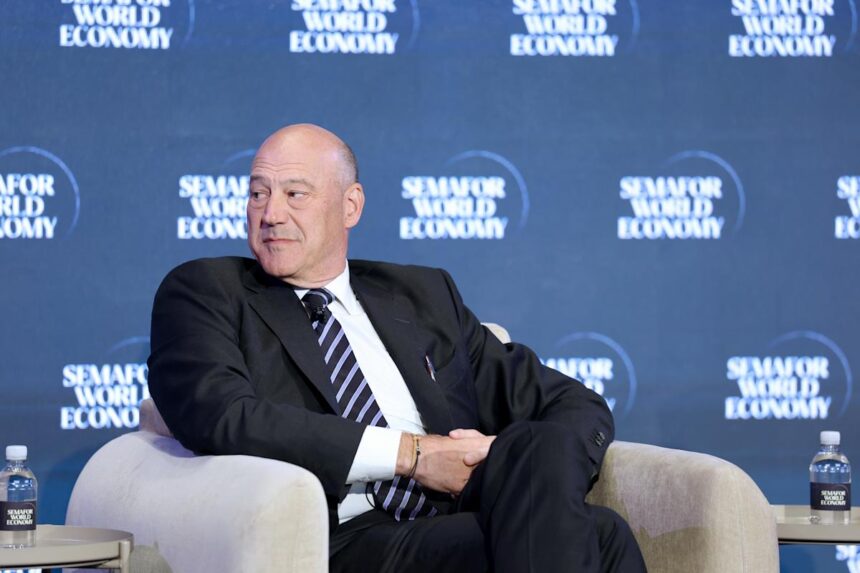
The new chairman of the Federal Reserve is prepared to take a “fundamentalist” approach to monetary policy, according to former National Economic Council director Gary Cohn.
“Look, I think Kevin [Warsh] “He’s a very honest guy,” Cohn said of Warsh, a former Federal Reserve governor and Morgan Stanley executive. “What you saw during the confirmation hearing and what you saw from Kevin in the 2008 financial crisis is what you’re going to get.” “I don’t think there will be much commotion there.”
Cohn, who served as a senior economic adviser in the first Trump administration, worked closely with Warsh during the 2008 financial crisis, while Warsh was governor of the Federal Reserve and Cohn was president of Goldman Sachs. He suggested investors should expect two major changes under Warsh’s leadership that could redefine the central bank’s relationship with Wall Street.
The first major change centers on the Federal Reserve’s multi-trillion-dollar portfolio. Warsh is expected to be more “aggressive” than previous presidents in reducing the Federal Reserve’s enormous balance sheet without disrupting markets, according to Cohn.
“That’s a fine line to walk,” Cohn said, explaining that while the Fed has been on a slow sell-off, Warsh likely intends to pick up speed to reduce the government’s footprint in credit markets.
Beyond the balance sheet, the era of Fed over-communication may be coming to an end. Cohn argued that the central bank has become too involved in what he described as “non-traditional Fed activities” over the past eight years, including climate policy and social initiatives like DEI. “It’s not in the Fed’s mandate,” Cohn insisted, suggesting a more limited approach is imminent.
“Kevin will be very fundamentalist in talking about issues that are squarely within the core mandate of the Federal Reserve,” Cohn said. This return to basics includes a review of how the chair speaks to the audience. Expect transparency from Warsh without being “regimented” to a strict transparency schedule.
“I think Kevin is going to communicate less,” Cohn said, noting that the Federal Reserve has become too predictable, often noting that it can’t act on interest rates unless a news conference is already scheduled. This predictability, in Cohn’s opinion, has suffocated the institution.

The Federal Reserve should have “maximum flexibility,” he added. “If the Fed needs to intervene or surprise the market to accomplish something, it shouldn’t have had to telegraph it,” he said. This signals a possible return to the “Greenspan era,” where the Federal Reserve maintained the element of surprise to keep markets honest.
Reflecting on their time together during the 2008 financial crisis, Cohn described Warsh as “unflappable” and “unfazed” by the market chaos. Even when major investment banks like Bear Stearns and Lehman Brothers were failing, Warsh remained focused on its core mission: protecting assets and keeping financial markets functioning.