
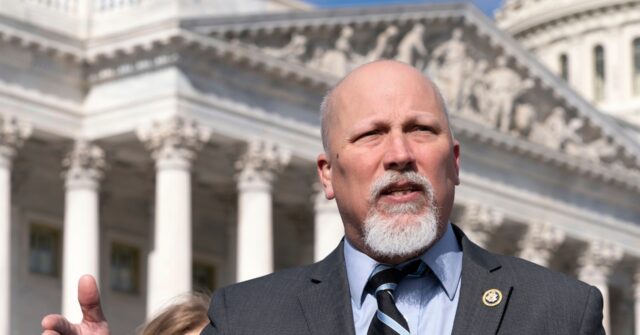
Rep. Chip Roy (R-TX) on Monday introduced legislation that would revive the 60-day Department of Homeland Security funding measure previously passed by the House while attaching the SAVE America Act, underscoring that some House Republicans continue to push for passage of the election security package even as the Senate has pivoted toward a reconciliation strategy.
Roy’s bill would combine the House-passed continuing resolution funding all DHS for another 60 days with the SAVE America Act, which would require proof of citizenship to register to vote, voter ID, eliminate universal voting by mail except in cases of disability, illness, travel or military service, and codify protections for women’s sports and a ban on transgender surgeries for children.
The legislation, titled “Homeland Security and Other Continuing Appropriations Act, 2026,” contains three divisions: full-year DHS appropriations, a continuing supplemental resolution, and the SAVE America Act. The continuing resolution section of the bill would amend the existing interim funding law by extending it through the date of enactment and specifying that it covers the period beginning February 14, 2026, when the DHS funding lapse began.
Rejects the existing DHS funding framework by providing such language in the explanatory statement related to U.S. Immigration and Customs Enforcement (ICE) and CBP Border Security Operations “shall have no force or effect,” that the amounts listed for those accounts in the “Department of Homeland Security Act of 2026” table “shall all be $0,” and that “no amounts may be transferred” to the DHS Border Security Operations account. CBP on the DHS assignment table.
Roy told Breitbart News exclusively:
The House GOP has acted responsibly, passing the SAVE America Act and fully funding DHS four times. We must not give in to Democratic demands, putting ICE and Border Patrol funding at risk through a reconciliation strategy that sets a bad precedent. Instead, we should redouble our efforts and pass this bill I just introduced, which would fully fund our officers and also pass the SAVE America Act, President Trump’s top priority for securing our elections. Following the passage of my bill, we should go on the offensive and quickly pass a reconciliation bill that funds all of DHS along with key America First priorities, like defense.
The bill’s text would also enact the citizenship verification provisions of the SAVE America Act. It states that “documentary proof of U.S. citizenship” would include “a valid U.S. passport,” a REAL ID-compliant identification proving citizenship, or certain military or government-issued identification proving your birth in the United States.
Roy’s proposal comes after President Donald Trump reiterated saying doesn’t want any DHS funding deal unless it includes the SAVE America Act. On March 22, Trump said that Democrats wanted a deal on DHS funding, but that he didn’t think “any deal should be made on that until they pass SAVE America.” Trump later wrote in Truth Social that Republicans should not reach a deal with Democrats unless they voted to pass the SAVE America Act.
Trump doubled down on March 26. vocation Senate Republicans to eliminate the filibuster if necessary to pass funding for DHS and the SAVE America Act. He urged Republicans to “END THE FILIBUSTER” and add “the full five elements, the elements of the SAVE AMERICA ACT.”
The renewed push also comes after the House and Senate sharply disagreed over DHS funding. On March 27, House conservatives refused the package passed the Senate because it omitted funding for the deportation operations of Immigration and Customs Enforcement and Customs and Border Protection. President Mike Johnson then agreed to push for a 60-day stopgap measure that funded all of DHS, including ICE and CBP, after meeting with the House Freedom Caucus.
At the time, Roy said, “The Senate bill is not workable” and said the House would return existing legislation with CBP and ICE. House conservatives argued that DHS funding should be tied to provisions such as voter ID and border security.
However, the Senate has moved increasingly toward addressing ICE and border funding through budget reconciliation, which would require just 51 votes. Senate Majority Leader John Thune signaled that Republicans would likely go that route after the Senate passed their DHS package.
Roy previously indicated could have agreed to a compromise to fund all of DHS except ICE Detention and Removal Operations, saying on April 1 that it was considering such an approach and then addressing ERO funding later through reconciliation.
Roy has it too warned that relying on reconciliation to fund DHS would be “dangerous” because it would move national security funds out of the normal appropriations process and may not happen quickly enough. He said reconciliation may ultimately be necessary if Democrats refuse to support DHS funding, but argued it is a risky precedent.