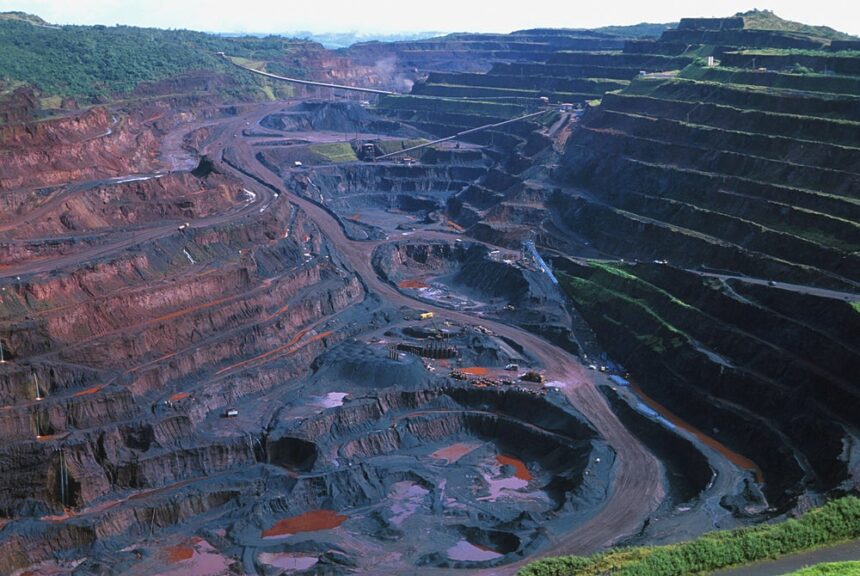
Brazil is the world’s second largest iron ore producer and will account for 16.7% of global production in 2024. The country’s iron ore production is expected to have increased 1.9% in 2025 to 437.2 million tonnes (mt). The growth was mainly supported by strong production from Vale, the country’s largest iron ore producer. In addition, the gradual resumption of the No. 4 Pelletizing Plant and the commissioning of the second concentrator at BHP’s Samarco mine in December 2024 further supported the country’s production.
In 2025, Vale’s production reached 336.1 million tons, representing 76.9% of the country’s production, making it essential to drive the country’s production growth. The Capanema mine within Vale’s Mariana Mining Complex began operations in September 2025 and will add 15 mtpa to the company’s production target by 2026. In addition, the expansion of the Carajas Serra Sul S11D Project, scheduled to start in the second half of 2026, and the commissioning of Vargem Grande 1 (of the Vargem Grande Mining Complex) will further support production growth in 2026.
The upward production trend was partially offset by lower raw ore (ROM) availability at Serra Norte, elevated maintenance activity at Itabira and a strategic pipeline inspection at Minas-Rio completed in mid-2024. Looking ahead, Brazil’s iron ore production is expected to continue growing by 5.9% in 2026 to reach 462.9 million tonnes, supported by planned increases at Vale, which is targeting a range production of 335 to 345 million tonnes in 2026. Expansions at other major mines, including Gerdau Mining’s Miguel Burnier and CSN Mineracao’s Casa de Pedra, will further boost the country’s production.
Over the forecast period (2026-2035), Brazil’s iron ore production is expected to grow steadily at a compound annual growth rate of 3.0%, reaching 605.7 million tonnes in 2035, supported by sustained mining expansions, efficiency improvements in key producing regions and the start-up of new mines such as the Block 8, Jambeiro, Morro do pilar, Joao Monlevade, Serro 2030 projects. and Colomi, Amapá and Bamin Restart. in 2031.
Brazil’s iron ore industry continues to face significant challenges, including environmental concerns, infrastructure bottlenecks and social conflicts, all of which have contributed to heightened scrutiny and operational disruptions in recent years. However, the country remains well positioned for long-term growth due to its vast mineral reserves and ongoing expansion initiatives by major producers. Backed by resilient global demand, Brazil’s presence as a key iron ore supplier in the global iron ore market is expected to strengthen in the coming years. The Brazilian government is actively updating its mining policy framework, including a recently launched public consultation to review the National Mining Plan 2050 for the long-term sustainable development of the sector. Additionally, in December 2025, the Senate Economic Affairs Committee approved a proposal to establish a National Critical and Strategic Minerals Policy. This policy aims to stimulate domestic processing and secure supply chains, a move that could influence investment and production dynamics in the iron ore industry during the outlook period.